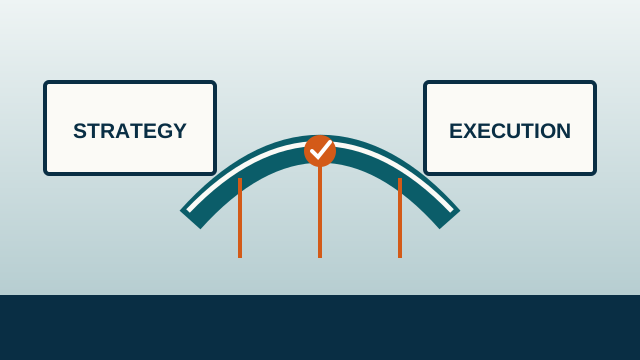
The modern technology leader should improve strategic clarity, operating leverage, resilience, financial discipline, and the organization’s ability to execute.
Business Fluency
The technology leader should understand how the organization creates value: customers, products, revenue, margin, capital, risk, regulation, operations, and competitive position. Technical expertise is necessary, but it is not sufficient for enterprise leadership.
A CEO should expect the CIO to translate business ambition into capabilities, choices, dependencies, economics, and an execution path—not merely respond with a list of systems.
A Clear Portfolio, Not a Project Inventory
Leadership teams do not need hundreds of status lines. They need a clear view of the few outcomes technology is enabling, the investments supporting them, the risks that could prevent success, and the management decisions required next.
The CIO should be able to explain what will be different for customers, employees, risk, cost, resilience, and growth—and how the organization will know.
Resilience and Truth-Telling
The CEO should receive an honest view of operational fragility, cyber risk, technical debt, concentration, recovery readiness, and execution capacity. Optimism without evidence is not leadership.
The CIO must be willing to surface uncomfortable facts early, frame choices, recommend action, and avoid using complexity as a shield. The goal is not alarm. It is informed agency.
Financial Accountability
Technology leaders should understand total cost, contractual commitments, unit economics, capacity, depreciation, operating expense, capital investment, and the expected value of the portfolio.
A strong CIO can defend investment, identify waste, simplify the vendor landscape, challenge business cases, and explain where additional spending will create meaningful advantage or reduce material risk.
An Operating Model That Can Deliver
Strategy is constrained by talent, architecture, data, governance, process, vendors, and leadership capacity. The CIO should build an organization capable of delivering—not merely create an ambitious roadmap.
That includes developing leaders, clarifying decision rights, simplifying work, setting standards, measuring outcomes, and creating productive relationships across business, risk, finance, operations, and the board.
The Standard
The standard for technology leadership should be simple: Is the enterprise more capable because this function exists? Can it make better decisions, serve customers more effectively, operate with greater leverage, recover with confidence, and execute strategy faster?
When the answer is yes, technology is no longer a support function. It is enterprise leadership.
What leaders should carry forward
- 01
Expect business and financial fluency in addition to technical depth.
- 02
Demand a decision-ready portfolio tied to measurable enterprise outcomes.
- 03
Hold the CIO accountable for resilience, truth-telling, and organizational capability.

Matthew March
Matthew March is a financial-services technology executive, board director, Fractional CISO, and adviser with more than 25 years of experience connecting technology strategy to growth, resilience, governance, and enterprise value.
Read Matthew’s Story